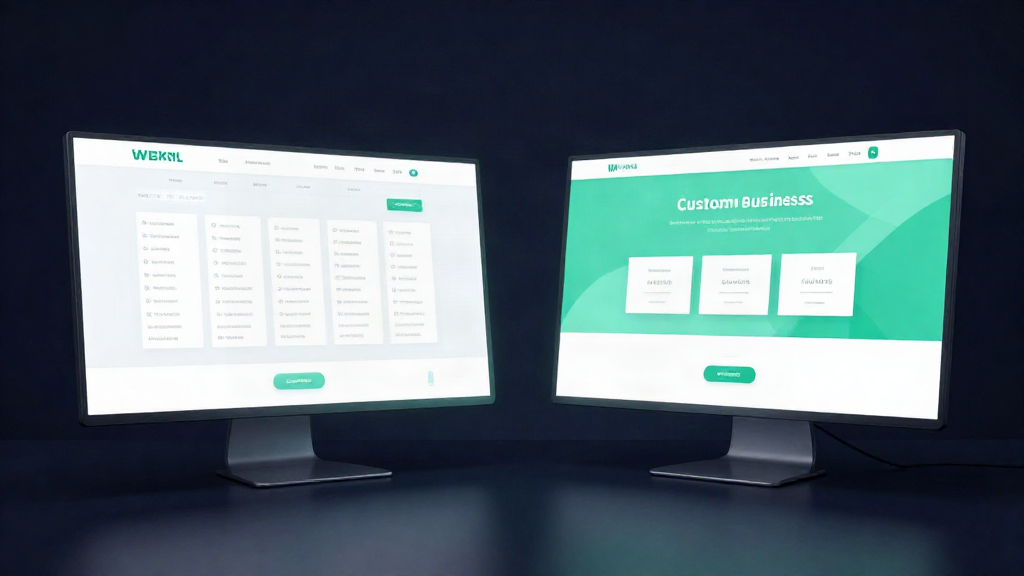
Custom Website vs Template: Which Wins More Leads?
- Liz Vargas
- November 5, 2026
- Uncategorized
- 0 Comments
Every service business owner faces the same fork in the road: grab a $200 template and launch this week, or pay for a custom website and wait a month or two. The template looks fine. It loads. It has a contact form. So why would anyone pay more?
Here’s the uncomfortable answer: a website is not a brochure, it’s a lead machine, and the two options are not built the same way. A template is designed to look acceptable to as many businesses as possible. A custom site is designed to convert one specific buyer: yours. That difference shows up in speed, structure, and conversion paths, and it shows up in your lead count.
Let’s break down what you actually get with each, where templates quietly leak leads, and how to decide based on your growth goals, timeline, and budget.
What you actually get with a template
A template is a pre-built design sold to thousands of businesses. You choose a theme, swap in your logo and copy, tweak the colors, and push it live. On paper, you get a professional-looking site for a fraction of the cost and a fraction of the time.
What you don’t get is control. You get the page structure the theme designer chose, the load order their code decided on, and the conversion layout that made sense for a fitness studio, a law firm, and an ice cream shop at the same time. That’s the trade: speed and price now, in exchange for a site that fits nobody perfectly.
The pitch is tempting, especially when cash is tight and you need something online yesterday. Just be clear about what you’re buying, because the costs don’t stop at checkout.
What a custom build actually buys you
A custom website starts with your buyer, not your aesthetic. Before anything is designed, you answer the questions that matter: Who is the ideal client? What do they need to believe before they book a call? What’s the single action we want them to take? Every section then earns its place against that goal.
In practice, that means a page structure built around your sales process, a lead capture path wired to your intake and follow-up, and code that isn’t carrying 40 plugins it doesn’t need. You’re not paying for prettier pixels. You’re paying for a machine that turns anonymous traffic into qualified conversations, and that stays fast and clean as you grow.
Where template sites quietly leak leads
Template sites rarely fail loudly. They leak slowly, in the gaps between design and intent. Here are the three you’ll feel first.
Speed
Templates ship with heaps of features you’ll never use: sliders, animation libraries, page builders on top of page builders. Every one adds weight. A site that takes four or five seconds to load loses a meaningful share of visitors before they read a word, and mobile visitors feel it worst. Custom code that includes only what the page needs loads faster and keeps more of the traffic you paid to attract.
SEO structure
Search engines reward clear structure: fast pages, logical heading hierarchy, clean URLs, and content organized around what people actually search for. Templates force your content into someone else’s layout, which often produces duplicate headings, bloated markup, and service pages that never target a real keyword. Custom builds let you architect the site around the searches your ideal clients are typing, so your service pages, location pages, and blog all reinforce each other instead of competing.
Conversion paths
A template’s contact form sits wherever the theme put it. A custom site puts the right next step in front of the right visitor at the right moment: a booking link after the proof section, a phone number above the fold, a clear path from blog post to consultation. Small friction compounds. Every extra field, every confusing menu, every dead-end page is a lead that quietly walks away.
How to decide: growth goals, timeline, and budget
There’s no universal winner. There’s a winner for your situation.
Choose a template or a low-cost starter site if you’re brand new, testing an offer, or need something live in days, and you accept that you’ll likely rebuild within a year or two once the offer is proven.
Go custom if you already generate leads, sell through consultations or estimates, and want more of the same traffic to turn into booked work. If your goal is measurable growth rather than simply being online, the custom build is the cheaper decision over the long run, because you stop paying twice: once for the template, and again to fix what it can’t do.
A simple test: if your website is a placeholder until you figure things out, keep it cheap. If your website is a growth asset, build it like one.
The honest bottom line
A template gets you online. A custom website gets you clients. Neither is wrong, but they’re answering different questions, and confusing the two is how service businesses end up with a site that looks fine and produces nothing.
This is exactly the problem the web development pillar of the RISE Growth System is built to solve. It combines a custom-built site with SEO and automation, so your pages are structured to rank, your traffic converts into booked calls, and your follow-up runs itself, cutting admin time by 40% in 60 days.
If you want a website that pulls its weight instead of just sitting there, that’s the conversation worth having.
Related Posts