Local SEO for Service Businesses: A Step-by-Step Playbook
- Liz Vargas
- November 4, 2026
- Uncategorized
- 0 Comments
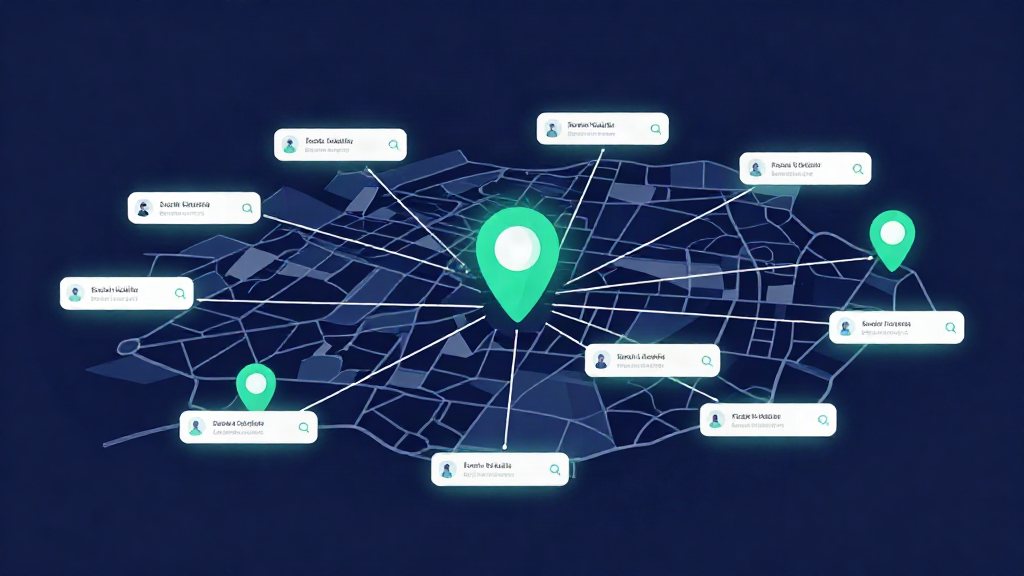
If you run a service business, your next client is probably searching for you right now – by service and by city, not by your name. They type “commercial cleaning New York” or “fractional CFO Charlotte” and they book whoever shows up in the map pack. Local SEO for service businesses is the work that puts you in that shortlist. This playbook walks through why local search matters, the three levers that move it, and a 30-day plan you can actually run.
Why Local Search Decides Which Service Providers Get Found
Local search is where high-intent buyers live. Someone searching “emergency plumber near me” is not browsing – they have a problem, a wallet, and a short window of patience. Google reads local intent from the query, the searcher’s location, and their history, then serves a map pack of three businesses plus a handful of organic results.
For professional service firms, that map pack is the whole game. The businesses sitting in the top three earn the majority of calls on mobile, and most searchers never scroll past the first screen. If you are not there, you are not losing to a better competitor – you are losing to one that is easier to find. That is a fixable problem, and it usually has nothing to do with your actual service quality.
The metro focus matters too. A firm that ranks well in New York, Boston, or Charlotte does not automatically rank in Tampa or Nashville. Google treats proximity as a ranking signal, so local visibility is won neighborhood by neighborhood, not with one national page.
The Core Local SEO Levers
Three signals do most of the heavy lifting. Get these right before you touch anything else.
Google Business Profile
Your Google Business Profile (GBP) is the single highest-leverage local asset you own. It is the listing behind the map pack, and Google rewards complete, active, consistent profiles. Fill every field: primary and secondary categories, service areas, hours, attributes, and a real description written for humans. Add photos regularly – geotagged exterior and team shots outperform stock every time. Post updates weekly, even short ones. Google reads that activity as a sign the business is alive and worth surfacing.
Location Pages
One homepage that vaguely mentions “serving the East Coast” will not rank in a specific city. Build a dedicated page for each market you actually serve, with the city in the title, a unique description of how you work there, local proof (projects, clients, neighborhoods), and embedded directions or a map. Duplicate pages with the city name swapped out get ignored or penalized, so every location page needs genuine, specific content.
Reviews
Reviews are both a ranking factor and a conversion factor. Volume, recency, and rating all feed the algorithm, and searchers trust reviews more than anything you write about yourself. The mistake most firms make is asking once and hoping. A steady flow of fresh reviews beats a burst that fades. Ask every happy client at the moment of success – right after delivery, not weeks later – and make it effortless with a direct link.
A 30-Day Local SEO Action Plan
Here is a realistic four-week sprint that turns these levers into booked calls.
Week 1: Fix the Foundations
Claim and fully complete your Google Business Profile. Run a citations audit – your name, address, and phone number (NAP) must match exactly across your website, GBP, and directory listings. Inconsistencies quietly erode trust signals, so fix the mismatches now. Target the ten to fifteen directories that matter for your industry and markets.
Week 2: Build Location Pages
Pick your two or three highest-value markets and write a genuine location page for each. Include the target city and service in the H1, describe how you serve that market, add local proof, and link internally from your homepage and service pages. Keep the copy specific enough that no other city page could use it.
Week 3: Turn Reviews Into a System
Set up an automated review request that fires after every completed job. Add a short, personal ask from the account owner, not a generic template. Respond to every review, especially the critical ones – a calm, professional reply does more for trust than a wall of five-star ratings.
Week 4: Measure and Double Down
Track three numbers: your ranking for the core city-plus-service queries, your GBP calls and direction requests, and organic form submissions. Compare against week one. Then pour effort into whatever moved. If calls are climbing but bookings lag, the problem is your follow-up, not your SEO – and that is a different system to fix.
The Takeaway
Local SEO for service businesses is not a mystery and it is not a one-time task. It is three levers – a complete Google Business Profile, genuine location pages, and a steady review engine – run consistently. Firms that treat it as a system, not a scramble, are the ones that keep showing up when nearby clients search.
You do not have to become a marketing expert to make this work. You do have to stop leaving your local visibility to chance. If you want the local search engine portion of this built and run for you, that is exactly what the SEO arm of the RISE Growth System is for.
Related Posts